

Super Overs sit at the heart of T20 cricket’s chaos. They are tiny windows six balls for each side where skill, nerve, planning, and instinct collide in their rawest forms. Across leagues like the IPL, PSL, BBL, CPL, SA20, WPL, MLC, and global tournaments such as the T20 World Cup, Super Overs have grown into pressure laboratories. They strip away the comfortable rhythms of a 20-over match and expose teams to the sharp edge of decision-making under stress.
Super Overs do not merely decide T20 or Indian Premier League Champions. They reveal truths about teams: how well they handle pressure, how quickly they think, how effectively they communicate, how deeply they plan, and how much trust exists between captains and players. In these moments, reputations are rewritten and future tactical philosophies are shaped.
This article explores why Super Overs offer one of the purest tests of a T20 team’s strength, drawing from real-world examples, expert analysis, and the evolution of modern franchise cricket.
The Psychology of the Super Over: A Battle of Nerves
A full T20 match may span three hours, but a Super Over compresses all its intensity into a minute of cricket. Teams that thrive in these moments are not always the most skilled; they are the most stable under pressure.
The emotional load is enormous. Players walk back after tying a match adrenaline pumping, uncertainty swirling and must reset instantly. The captain has seconds to assess the situation: Who is mentally ready? Who has clarity? Who has the temperament for pressure? These are not questions analytics alone can answer.
In leagues like the IPL, captains such as MS Dhoni, Rohit Sharma, and Faf du Plessis have displayed remarkable composure in these moments. Their calm presence provides players comfort, allowing them to perform without the weight of the moment suffocating them.
In the WPL, captains like Meg Lanning and Harmanpreet Kaur have shown similar mental steadiness, demonstrating that emotional control is as vital as tactical planning.
Under this intense pressure, a team’s character becomes visible.
Selection for the Super Over: The Ultimate Test of Clarity
Choosing the batter and bowler for a Super Over is one of the strongest indicators of a team’s tactical sharpness. In the heat of the moment, some franchises rely on star power, while others trust match-ups and data.
The best teams combine instinct with information.
Super Over selection requires answering questions quickly:
- Which batter handles yorkers best?
- Which hitter thrives against spin under pressure?
- Which bowler mixes pace intelligently?
- Who has the calmness to execute plans?
These decisions reveal how well a team knows itself. A captain who knows exactly which player is suited for a pressure role speaks of strong communication, defined roles, and strategic foresight.
One of the defining Super Overs in IPL history illustrated this principle: a team with a world-class hitter chose instead to send a lesser-known batter because he played the match-up better. That call, seemingly risky, paid off a reminder that clarity beats reputation when the stakes tighten.
Execution Over Innovation: Why Fundamentals Win Super Overs
Unlike a 20-over innings, a Super Over does not allow experimentation. There is no building phase, no pacing, no settling in. Teams must rely on fundamentals executed at a higher standard than usual.
This is why bowlers with strong yorkers, reliable slower balls, and disciplined lines become the natural choice. It is also why batters who excel at reading length early and accessing boundary angles often take strike.
The IPL has shown this repeatedly. When Lasith Malinga bowled a Super Over for Mumbai Indians, he stuck to his strengths: full, straight, and lethal. Teams that chase creativity over execution often crumble.
Even in SA20 and CPL, Super Over outcomes consistently highlight one truth: the simplest, sharpest skills under pressure carry the greatest value.
Super Overs Expose Depth,Not Just Star Power:
A team’s bench strength and internal structure become visible in a Super Over. While fans often expect big names to step up, global leagues have repeatedly shown that lesser-known players sometimes deliver because they’ve been groomed for specific roles.
During RCB’s build-up to their maiden IPL title in 2025, analysts noted how their training sessions included simulated pressure overs, a reason younger players held nerve in tight situations. Although RCB did not rely heavily on Super Overs that season, the preparation culture they built reflected championship DNA.
In the PSL, teams like Lahore Qalandars and Islamabad United emphasize role primers preparing players from the bench to be ready for sudden-pressure scenarios.
Super Overs amplify this emphasis. Teams that rely only on star performers often break. Teams with depth, clarity, and culture endure.
Tactical Layers: Field Placements, Match-Ups, and Bowling Plans
Every decision in a Super Over is magnified:
- where the long-off stands,
- whether mid-wicket is deep or inside,
- whether the bowler goes around the wicket,
- which matchup defines the first two balls.
Modern T20 leagues use analytics to determine ideal field placements for Super Overs. However, the captain must translate data into intuition. Dew, wind direction, pitch bounce, batter psychology all become elements of the tactical equation.
Consider how some teams stack fielders on the leg-side for batters who favor slog-sweeps. Or how others bring fine legs up to tempt a confusion shot. These are micro-decisions that turn into macro outcomes.
| Tactical Choice | Impact in Super Over |
|---|---|
| Bowler angle change | Disrupts batter’s boundary arc |
| Deep fielder shuffle | Removes high-percentage zones |
| Early yorker attempt | Sets rhythm and creates doubt |
| Slower-ball bluff | Forces batter into mistiming |
These layers of thinking showcase the tactical richness hidden within six balls of cricket.
The Captain’s Presence: Leadership That Shapes Micro-Moments
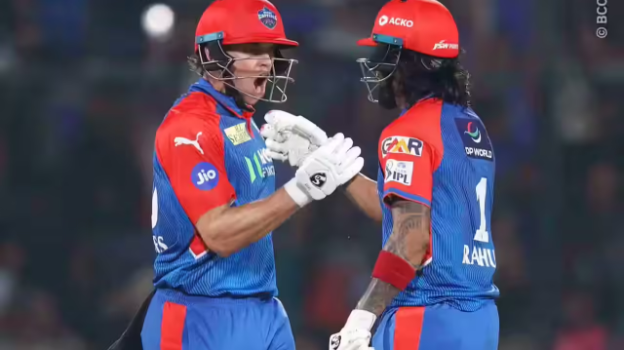
Captains influence Super Overs profoundly. Their body language, tone, and clarity of instruction ripple through the team.
A captain running with confidence to the bowler’s mark, speaking calmly, or simplifying the plan can relax a nervous bowler. Similarly, telling a batter, “Just look for one big shot first,” can reduce anxiety.
Dhoni, widely regarded as one of the best minds in T20 cricket, was known for reducing complex Super Over scenarios into simple, actionable steps. Rohit Sharma’s approach was similar clarity, reassurance, and field discipline.
In the WPL, Meg Lanning’s experience showed how invaluable emotional poise becomes when every ball carries enormous weight.
Leadership in Super Overs brings human connection to the forefront.
Super Overs Across Leagues: What Global Cricket Has Learned
Different leagues treat Super Overs with different philosophies:
- IPL: Match-up heavy, analytics-driven, captain-led execution.
- PSL: Pace and swing dominate, with aggressive bowling plans under pressure.
- BBL: Unpredictability fuels bold tactical choices, often involving unconventional hitters.
- CPL: Spin plays a major role, especially on slower surfaces.
- SA20: Balanced strategies with deep planning through backroom analytics.
- WPL: Structured batting rotations and spin use show maturity despite the league’s youth.
- MLC: Teams use overseas expertise, leaning heavily on experienced players for Super Overs.
Across continents, Super Overs have become not just tie-breakers but case studies of league style, strategy, and identity.
Why Skill Under Pressure Outweighs Raw Power?
Fans often assume Super Overs belong to the biggest hitters. But modern cricket shows a shift: teams increasingly prefer batters who read the ball early and bowlers who execute tight lines.
A batter mistiming a slog loses an entire over. But a batter who can place a boundary smartly, or convert a low full toss into a gap shot, creates consistency.
Similarly, bowlers who can adapt within two deliveries reading batter movement, adjusting pace, changing angles show true T20 mastery.
Brute force may win you early overs. Super Overs demand clarity and temperament.
The Emotional Rollercoaster – How Teams Regroup After a Tie?
One of the most overlooked aspects of Super Overs is the emotional handling of tied matches. Teams often enter the Super Over having either failed to close a chase or failed to defend a score. Both scenarios carry psychological baggage.
The best sides have mental-conditioning tools built into their culture:
- Breathing routines,
- Short huddles,
- Role-based cues,
- Calming triggers,\
- Simplified plans.
India’s 2022 T20 World Cup Super Over preparation, for instance, involved visualisation exercises. IPL teams now invest in sports psychologists who help players re-center quickly.
The WPL has already adopted similar methods, showing how rapidly the women’s game is evolving in high-pressure management.
A team’s emotional response defines how they begin a Super Over.
Super Overs Expose Weaknesses Teams Hide Over 40 Overs:
A 20-over match allows teams to recover from errors. Super Overs do not. They reveal cracks in:
- communication,
- skill execution,
- situational planning,
- leadership flow,
- pressure temperament.
A team struggling with death bowling often collapses in Super Overs because the same weaknesses resurface. A side that lacks middle-order clarity might fail to identify its best hitter for sudden pressure.
In 2025, RCB’s ability to stay composed in tight finishes even without multiple Super Overs highlighted an important truth: teams that prepare for pressure often rise above it, whether in over 20 or over 21.
The Future of Super Overs: More Strategy, More Science, More Drama
As global T20 leagues expand, Super Overs will continue to evolve:
- Teams will build data models specifically for Super Overs,
- Bowlers will rehearse six-ball variations as structured routines,
- Batters will simulate boundary-angle drills under time pressure,
- Leaders will refine decision scripts for sudden-death cricket.
Some leagues have already experimented with multiple Super Overs. Others have used tie-break formulas based on boundary count. But whatever the rulebook becomes, one thing is certain: the Super Over will remain the purest window into a team’s soul.
Conclusion:
Super Overs magnify everything skill, leadership, planning, nervousness, courage, and clarity. They reduce cricket to its most elemental form and reveal qualities that often stay hidden across 40 overs. This is why franchises invest so much in preparation and why fans remember Super Overs long after the season ends.
A Super Over is a pressure mirror. It reflects what a team truly is not what it hopes to be.
Across IPL, PSL, WPL, CPL, SA20, BBL, MLC, and world tournaments, the teams that win Super Overs are not always the most explosive or the most famous. They are the ones who think clearly, execute simply, and stay connected under pressure.
In the end, Super Overs tell us what T20 cricket really values: nerve, clarity, and the ability to deliver when the world shrinks into six unforgettable balls.