

In the crowded mobile market of 2026, building an app is the easy part. Getting people to find it, download it, and keep using it is the hard part. With millions of apps on the App Store and Google Play, “build it and they will come” is a guaranteed recipe for failure.
Success today doesn’t start with coding; it starts with strategy. Before a single line of code is written, you need to validate your idea, design for retention, and plan for discovery. Here is the blueprint for launching an app that actually survives.
1. Start Small: The Power of Prototyping and MVP
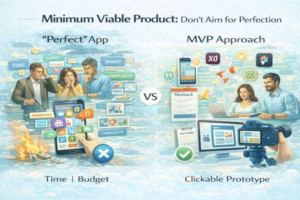
The biggest mistake founders make is trying to build the “perfect” app on day one. They spend months (and fortunes) adding every feature imaginable, only to launch and find out users don’t care.
The smarter approach is the Minimum Viable Product (MVP). Build the core version of your app that solves one specific problem extremely well. Use Prototyping tools to create a clickable model before development begins. This allows you to test the flow and get user feedback without the high cost of engineering. If you fail, you fail fast and cheap—then you iterate.
2. UI/UX: Design for Retention, Not Just Aesthetics
A beautiful app might get a download, but only a usable app gets a second open. UI/UX Design is your retention strategy.
User Interface (UI) is how it looks; User Experience (UX) is how it works. Good UX minimizes the number of taps to complete an action. It uses familiar gestures (like swiping to delete) so users don’t have to “learn” your app. If a user feels frustrated or confused within the first 60 seconds, they will delete the app. In the mobile world, clarity always beats cleverness. To know more UI/UX Designing strategy click here.
3. ASO: The SEO of the App World
You can have the best app in the world, but if nobody can find it, it doesn’t exist. This is where App Store Optimization (ASO) comes in. Just like you optimize a website for Google, you must optimize your store listing for Apple and Android.
This involves researching high-volume keywords for your title and description, designing an eye-catching icon, and optimizing your screenshots to tell a story. As highlighted in Apple’s official guidelines on product pages, your first few screenshots are arguably the most important marketing real estate you own—they are often the deciding factor between a scroll and a download.
Building a Roadmap
Launching an app is a journey that involves technical skill, creative design, and marketing savvy. It requires a holistic view that connects the code to the customer.
If you are planning a mobile product and need guidance on validation, design, or growth strategies, you can read more Meraseo strategies. Understanding the full lifecycle of an app is the only way to turn an idea into a profitable business.
Conclusion
Don’t let your app become a “zombie” in the app store. By starting with a lean MVP, designing a seamless user experience, and optimizing for search visibility from day one, you give your product the fighting chance it deserves. Remember: The best apps aren’t just written; they are designed.